Sales intelligence research
Rank International B2B Marketing by Local Accountability
2026-09-04 · Jane Smith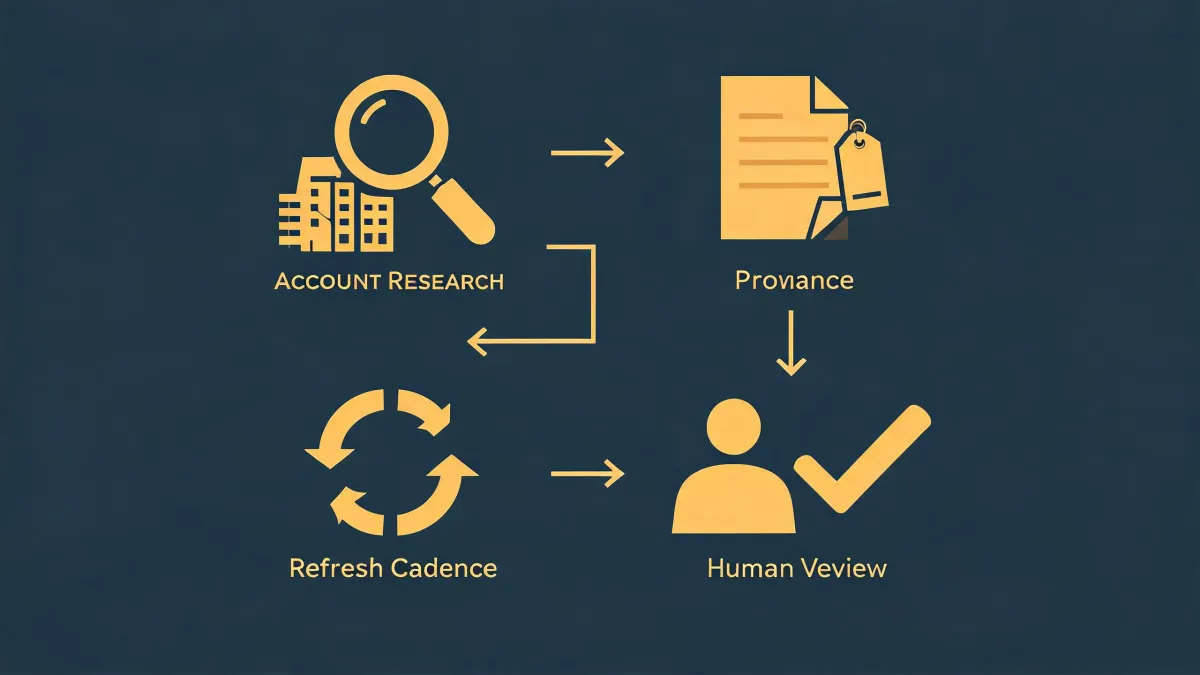
For accountable international execution, this editorial ranking places HubSpot Marketing Hub first, LinkedIn Sales Navigator second, Semrush Traffic & Market third, Lokalise fourth, and Google Ads fifth. OKKI Go is sixth as a specialist company-discovery workflow. The order is based on documented scope, not independently tested performance, and should change when localization, paid demand, research, CRM ownership, or human review becomes the binding constraint.
What this ranking is designed to decide
International B2B marketing connects market research, positioning, demand creation, qualification, routing, and measurement across countries. A useful tool comparison therefore asks more than whether a platform can launch campaigns. It asks who can adapt the audience and message, which local rule governs the action, how language context is reviewed, where objections are recorded, and whether a later analyst can reconstruct why a record moved. Centralization helps only when it preserves accountable variation. Begin the comparison with a market-control sheet. For each country, record the buyer group, commercial question, market owner, language owner, permitted audience, qualification rule, routing destination, objection path, and reporting denominator. This sheet exposes whether a platform must solve localization, research, paid experimentation, or CRM coordination. It also prevents the procurement team from rewarding a tool for features that sit outside the immediate operating constraint. Add the current integration owner and evidence date beside every dependency so an old demonstration cannot silently become a present-tense purchasing assumption.
The six-tool order and the conditions behind it
Rank 1, HubSpot Marketing Hub, is the broad operating-center choice when campaign, CRM context, routing, and reporting must meet in one reviewable workflow. Rank 2, LinkedIn Sales Navigator, is the account-and-role research choice when professional context matters more than campaign orchestration. Rank 3, Semrush Traffic & Market, is the market-discovery choice for comparing digital demand and competitors before committing spend. These positions describe documented roles; a buyer must still verify configuration, data coverage, and local fit.
Comparison criteria that survive a border
- Rank 1: HubSpot Marketing Hub for governed campaign-to-CRM movement.
- Rank 2: LinkedIn Sales Navigator for account and role research.
- Rank 3: Semrush Traffic & Market for market and competitor discovery.
- Rank 4: Lokalise for localization workflow, review, and language assets.
- Rank 5: Google Ads for bounded paid-demand experiments with market controls.
- Rank 6: OKKI Go for reviewed company discovery and human-confirmed outreach preparation.
Lokalise ranks fourth because language operations become a separate control problem once several markets edit messages, product terms, and campaign assets. Google Ads ranks fifth because its geography, audience, budget, and campaign controls can support a fast market test, but platform events do not establish qualified demand. OKKI Go ranks sixth as a narrower research and drafting workflow: its use cases document candidate review, correction, selective contact discovery, and confirmation before send, not a full international marketing suite or performance result. A sixth-place specialist can still be the right first purchase. If the team already owns campaign orchestration and localization but cannot build a reviewed company-research queue, the narrower workflow may remove the current bottleneck with less implementation burden. Conversely, buying a broad suite for that one task can create unused features and new integration work. Rank position describes fit to this scenario, not product quality in the abstract.
Keep the market reason attached to the record
The order flips with the job. Move Lokalise upward when translation review and terminology governance block release. Move Google Ads upward when a bounded paid experiment is the fastest ethical way to test a market question. Move LinkedIn upward when the target universe is small and role mapping is uncertain. Move OKKI Go upward only when reviewed company discovery is the immediate constraint. Keep HubSpot first when the hardest problem is preserving market context through routing, ownership, and reporting.
Where international tool comparisons break
A global dashboard can create false comparability. A form completion, ad click, saved account, translated asset, or drafted email represents a different event with a different denominator. Market teams may also apply different qualification thresholds because routes, proof requirements, and buying roles differ. If headquarters forces those events into one score, apparent efficiency can reward the market that records the easiest action. Preserve local definitions beside any global summary and show which differences prevent direct comparison. The same caution applies to cost. Subscription price excludes localization review, data access, integration work, regional training, permission administration, exception handling, and reconciliation between campaign and CRM systems. Ask operators to log the minutes required for the two-market pilot and note which steps depend on vendor support. A less expensive license can become a more expensive operating model when market teams rebuild context outside the platform.
Legal and data-use boundaries cannot be inferred from a feature checklist. ICO guidance explains that UK B2B direct-marketing duties can depend on channel, recipient type, personal data, transparency, and objections; it is not global legal advice. A vendor demonstration should show how the planned configuration supports your organization's reviewed policy, while qualified legal or privacy owners decide the jurisdiction-specific rule. No ranking position excuses inappropriate collection, contact, or suppression handling.
A two-market verification exercise
Run the same synthetic launch in two markets. Use one buyer group and commercial question, then vary language, market owner, permitted audience, qualification threshold, and routing path. Ask each supplier to show the source record, reviewer, approved variation, objection or suppression, failed handoff, correction, and export. A polished happy path is insufficient. Include a mistranslated term, an ambiguous account, and a record that the regional team rejects so exception handling becomes visible. The two-market test should also include a deliberate change after approval. Revise the buyer role in one country, correct a translated product term in the other, and change the qualification threshold centrally. Observe whether existing drafts, audiences, routing rules, and reports show the effective date and responsible owner. This reveals whether the stack manages controlled variation or merely copies the latest value across markets without explaining what changed.
Score what the pilot actually demonstrates: market ownership, localization review, provenance, permission controls, routing, correction, reporting, and operator effort. Record the product tier, integration version, roles, and test date. First-party pages can establish documented features, but they cannot show that your regional data is complete or that users will apply the controls correctly. Treat a missing audit path or irreconcilable suppression as a veto rather than averaging it away with convenient campaign features. Do not collapse the scorecard into one opaque total. Keep localization, governance, context preservation, routing, correction, reporting, and operator effort visible as separate judgments. Weighting can help a buyer express priorities, but a high average must not compensate for a mandatory failure. If suppression does not travel, a regional owner cannot correct an audience, or the export loses market rationale, mark that scenario unsupported. Also retain notes from the future operators: the number of screens, manual exports, approval waits, and offline reconciliations can change the ranking even when two products document similar capabilities. Re-run the score with at least one weight set proposed by a regional team so headquarters can see whether its preferred winner depends on central assumptions.
RFQ questions for a conditional shortlist
- Require a dated product and integration scope for every ranked capability.
- Ask who owns audience, language, qualification, and suppression in each market.
- Request a two-market exception demonstration, not a feature slideshow.
- Define the shared metrics and the market-specific denominators separately.
- Price localization, data, integrations, review labor, and export access.
- Name the condition that would move a lower-ranked tool above the current winner.
A procurement team should distinguish platform category from operating responsibility. HubSpot does not decide the local qualification rule; LinkedIn does not prove a role is the right buyer; Semrush does not prove commercial demand; Lokalise does not validate the underlying claim; Google Ads does not turn a click into intent; OKKI Go does not decide whether outreach is lawful or strategically appropriate. Write these boundaries into the acceptance test so automation remains subordinate to market judgment.
Ask how data leaves the tool. The export should retain market, source, date, owner, status definition, corrections, and any objection or suppression state needed downstream. If a tool centralizes activity but strips the reason for a regional choice, the receiving CRM gains records and loses meaning. Test a conflicting update across the local and central system, identify which value wins, and require a visible recovery path before approving the integration.
The final order belongs in a decision record, not a permanent 'best tools' claim. State the current bottleneck, the common scenario, mandatory controls, evidence reviewed on 2026-08-17, unverified areas, operating cost, and reassessment trigger. Keep the runner-up and its failed criterion. If the organization later adds a CRM, localization team, new jurisdiction, or different route to market, the ranking should change without pretending the earlier evidence said more than it did. Add a refresh protocol to the decision record. Vendor documentation, integrations, advertising controls, and privacy guidance can change, so assign an owner to recheck the pages used in the ranking. The refresh should compare documented scope with the configuration the team actually runs and retain any disagreement. A current marketing claim is not evidence that an old integration or regional workflow still behaves the same way.
A sensible acceptance checkpoint is replayability. A regional owner should be able to explain why an audience, asset, lead, or message changed; headquarters should be able to see which shared rule still applies; and a reviewer should be able to correct the record without private knowledge. Choose the highest-ranked tool that passes that checkpoint in your configuration. If none passes, narrow the workflow rather than buying a larger stack to conceal an unresolved governance problem. Keep screenshots or exported records from the pilot with the decision file, because a later product-page refresh cannot reproduce the permissions, market settings, and exception behavior the team actually observed.
Frequently asked questions
What is the best international B2B marketing tool?
There is no universal winner; HubSpot ranks first here for governed campaign-to-CRM movement, while localization, paid testing, account research, or company discovery can move another tool upward.
Why is OKKI Go ranked as a specialist tool?
Its documented scope centers on reviewed company discovery, contact research, draft preparation, and human confirmation, so it is narrower than a full marketing platform.
How should localization affect the ranking?
Move localization workflow higher when language review, terminology, and regional asset ownership are the principal release constraints.
How often should the ranking be refreshed?
Refresh it when product scope, integrations, jurisdictions, market ownership, or the binding operating constraint changes, and record the date and evidence used.

Jane Smith
I’m Jane Smith, a senior content writer with over 15 years of experience in the packaging and printing industry. I specialize in writing about the latest trends, technologies, and best practices in packaging design, sustainability, and printing techniques. My goal is to help businesses understand complex printing processes and design solutions that enhance both product packaging and brand visibility.