Sales intelligence research
I Wasted $3,200 on Okki Go Before I Built This Outreach Prep Checklist
2026-09-21 · Zainab Rahimi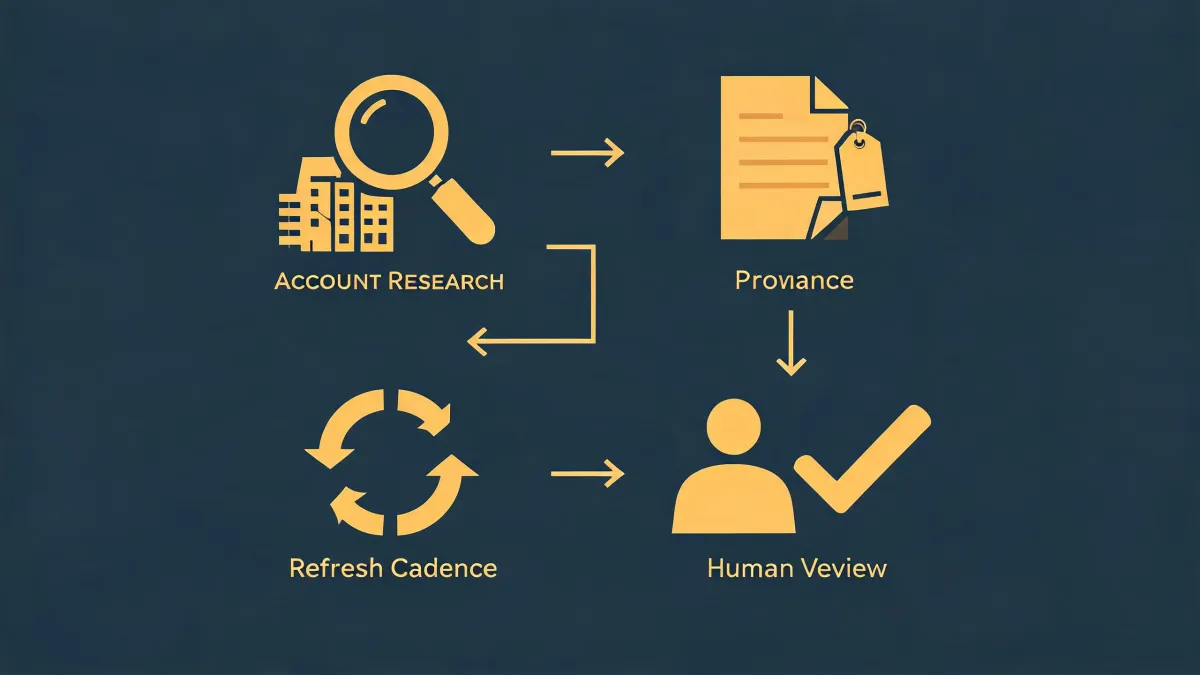
The Setup: Why I Rushed Into Okki Go
In February 2024, I was three weeks into a new sales ops role at a 12-person B2B SaaS company. Our SDR team was drowning in manual list building. Our reply rate was 1.8%. Our bounce rate was 11%. I got approval to buy okkigo (okki-go). We called it Okki Go internally. I thought okki go installation would take an afternoon. I was wrong.
We were using a mix of spreadsheets, LinkedIn Sales Navigator, and a low-cost bulk email verifier. I'd been told that agent-native prospecting would fix everything. So I signed up for okki-go, connected a bulk email verifier I found on a forum, and turned on a buyer intent data provider. I didn't read the docs on how buyer intent data providers fit into an agent-native prospecting workflow. I just assumed the AI would figure it out.
The Installation That Wasn't the Problem
The okki go installation itself went fine. API keys, domain setup, sending limits—all pretty straightforward. The problem was our okki go outreach preparation workflow. I skipped the paid onboarding session to save $300. (Note to self: that was dumb.) I didn't map our ICP to the agent's language. I didn't set up a pilot. I just uploaded 2,400 contacts and hit send.
The first campaign was a disaster. 18% bounce rate. Our domain got flagged within 48 hours. I remember staring at the dashboard at 2 AM. 432 bounces out of 2,400. Our CEO Slacked me: Why is our domain on a blacklist? I didn't have an answer. We spent $1,200 on a deliverability consultant. The intent data was also noisy. It flagged accounts that had already bought from us, and some that were completely out of our ICP. We wasted roughly $800 on bad data.
The Bulk Email Verifier Mistake
I assumed bulk email verifiers all worked the same. Didn't verify. Turned out they don't. What most people don't realize is that verifiers often disagree. One might say 'valid' and another 'risky' for the same address. I'd used a low-cost one that only checked syntax and MX records. It missed catch-all domains and role-based accounts. That's how we ended up with an 18% bounce rate.
Saved $300 by skipping the paid okki-go onboarding. Ended up spending $1,200 on deliverability repair. Net loss: $900, plus a damaged domain reputation that took six weeks to fix.
Where Buyer Intent Data Went Wrong
Buyer intent data was the shiny object. I signed up for a provider that promised 'real-time buying signals.' I didn't ask how often they refreshed their data. I didn't check if their signals mapped to our buying stages. I just imported everything. Honestly, I'm not sure why their refresh rate was so off. My best guess is they were repackaging old webinar registrations.
We got signals for companies that had downloaded a white paper two years ago. That's not intent. That's history. The agent-native prospecting workflow treated those as hot leads, so our SDRs wasted hours on dead accounts. We had a signal for a Fortune 500 that had visited our pricing page. I got excited. Turned out it was a student doing research. The intent data provider's company match was just an IP match from a shared network.
The Turning Point: A Pre-Flight Checklist
After the third rejection in Q1 2024, I created a pre-check list. I went back to okki-go and actually read the setup guide. I learned that okki-go expects clean inputs: verified emails, a defined ICP, and intent data mapped to specific buying stages. We built an 11-point checklist before any campaign.
5 minutes of verification beats 5 days of correction.
Here's the checklist we still use:
- Verify email list with a bulk email verifier that supports catch-all and role-based accounts (not just syntax).
- Run a pilot of 100 contacts before full send.
- Map buyer intent data providers to your ICP tiers. Don't import all signals.
- Check okki go installation: API keys, domain warmup, sending limits.
- Document the okki go outreach preparation workflow: who approves copy, who checks personalization.
- Use human-in-the-loop for the first 50 sends.
- Monitor bounce rate daily. Pause if it's over 3%.
- Re-verify emails after 30 days.
- Align intent data refresh rates with your sales cycle.
- Train SDRs on agent-native prospecting: it's not autopilot.
- Review results weekly and update the checklist.
The checklist wasn't rocket science. It was just the stuff I should've done from day one. We started with a 100-contact pilot. We used two bulk email verifiers and only sent to emails both marked as valid. We mapped intent data to three tiers: hot, warm, and cold. Hot meant they'd visited our pricing page in the last 30 days. Warm meant a demo page visit. Cold meant a blog post. We stopped importing everything else.
What Actually Changed
Over the next 90 days, our bounce rate dropped to 1.2%. Reply rate went to 4.3%. We caught 47 bad contacts before sending. We saved an estimated $8,000 in potential rework and wasted ad spend. But I'm not 100% sure how much of that is attributable to the checklist vs. just better data. Take this with a grain of salt.
We also set up a weekly review. Every Friday, we'd look at the bounce rate, reply rate, and intent data accuracy. We'd adjust the okki go outreach preparation workflow as needed. It wasn't set-it-and-forget-it.
My experience is based on about 40 outbound campaigns across two B2B SaaS companies. If you're running enterprise ABM with a 12-month sales cycle, your mileage will vary.
Per FTC advertising guidelines (ftc.gov), I won't promise you a specific reply rate. Your results depend on your market, offer, and data quality. But I can promise you this: if you skip the prep work, you'll pay for it later.
What I'd Tell You Before You Install Okki Go
Don't treat lead generation software as magic. Agent-native prospecting still needs a human to prepare the workflow. The okki go installation is the easy part. The hard part is the okki go outreach preparation workflow: clean data, clear ICP, mapped intent signals, and a human-in-the-loop process.
If you're using a bulk email verifier, test it against multiple providers on a sample of 200 emails. If you're buying intent data, ask for a sample and check the refresh date. And if you're installing okki-go, don't skip the onboarding. That $300 is the most valuable insurance you'll ever buy.
If you're evaluating lead generation software, ask about the onboarding. If they don't have a structured okki go installation process, that's a red flag. If they can't explain how buyer intent data providers fit into an agent-native prospecting workflow, walk away.

Zainab Rahimi
Zainab Rahimi is an independent social and multichannel prospecting analyst covering LinkedIn automation, connection workflows, profile research, email discovery, social outreach, browser extensions, and coordinated touch sequences. She applies EU GDPR data-minimization principles while assessing invitation acceptance, reply rate, profile-match accuracy, rate limits, channel overlap, sequence spacing, opt-out handling, and account restriction risk. Her guides help sales teams compare automation approaches, build controlled workflows, and balance personalization, compliance, channel resilience, and sustainable prospect engagement.