Sales intelligence research
OKKI Go Deliverability Best Practices: The Pre-Send Checklist I Built After Wasting $4,200
2026-09-07 · Jane Smith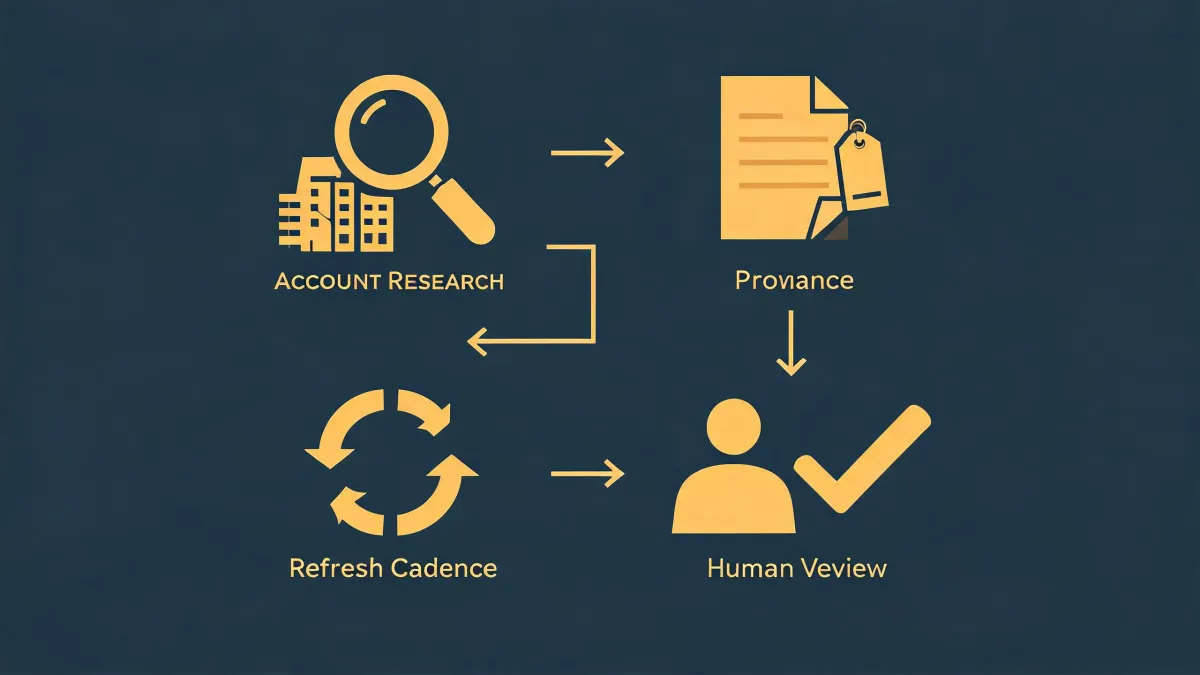
-
OKKI Go deliverability best practices: the short version
-
What I messed up before I took deliverability seriously
-
What is mass email and when should a B2B sales team use it?
-
OKKI Go agent native prospecting: less volume, more context
-
OKKI Go deliverability best practices
-
The cold email tool features that make or break a clean process
-
What a LinkedIn tool should do for B2B prospecting
-
Deliverability is also a brand decision
-
The boundary: what this checklist won't fix
OKKI Go deliverability best practices: the short version
If you're researching okki-go for your B2B sales stack, you're probably dealing with two separate problems: finding a prospecting tool and keeping email out of spam. OKKI Go can solve the first. The second depends on the process around it. I've learned that lesson the expensive way. In my years running outbound for B2B teams, I've personally wasted about $4,200 on campaigns that bounced, landed in spam, or reached people who should never have received them. This article is the checklist I wish someone handed me before I hurt our domain reputation.
The direct answer, if you read only one section: Use OKKI Go's agent native prospecting when your goal is a conversation; use mass email when your goal is an announcement or awareness. Agent native prospecting is not a fancier version of mass email. It's a workflow that mirrors a thoughtful SDR: research, enrichment, relevance, then human judgment.
What I messed up before I took deliverability seriously
I started out buying contact lists. Not with OKKI Go; before I adopted it. In 2019, I uploaded a 4,700-row spreadsheet of addresses that were probably three years old. I didn't verify a single row. The first send looked normal inside the tool. Then the bounces and old auto-responders piled up, and within days our calendar invitations started landing in spam. A bad list can poison a domain faster than any tool can fix it.
In September 2022, I made a second mistake: I ignored my own suppression rule. We had a strong list, but I imported the wrong export and included people who had already unsubscribed from our newsletter. A recipient replied, not to ask about the product, but to tell us they had asked to be removed. That complaint was a wake-up call. Now I treat compliance as part of deliverability, not a separate checkbox.
Those two failures taught me to respect the process inside a cold email tool. OKKI Go's workflow includes verification, enrichment, suppression, and an approval gate. But none of those features fix a lazy import or an old file.
What is mass email and when should a B2B sales team use it?
Mass email is one message sent to many recipients with little or no customization. In B2B, it appears as a broadcast, a newsletter, or a blast. There is nothing wrong with the format, but it is a communication tool, not a sales strategy. Use mass email when the message does not depend on the recipient's context. Good examples: a public webinar invitation, an event follow-up, a product update for existing users, or a benchmark report where the offer is the same for everyone.
Don't use mass email as the first outreach to important enterprise accounts. A generic first message tells the buyer they are one of many. If your goal is a meeting with a RevOps leader or an SDR manager, the message should show why you contacted them now. That requires account context, even if it is only one sentence.
Use OKKI Go for account-based outbound. Use mass email for campaigns where a reply is not the immediate goal. That simple split fixes most of the misuse I created in my early work.
OKKI Go agent native prospecting: less volume, more context
I think of agent native prospecting as the middle path between manual research and mass email. The agent researches an account, checks intent signals, finds the right person, enriches their email address, and drafts a relevant first note. Then a human decides whether the message feels right. Instead of focusing on volume, the agent focuses on context. That context protects your domain and makes the email deliverability features in your cold email tool useful.
OKKI Go uses this idea in the workflows I run. On smaller segments, it feels like a good SDR assistant. It doesn't replace an SDR, but it removes repetitive work and lowers the temptation to send one generic message to everyone.
OKKI Go deliverability best practices
After the 2019 incident, I wrote a six-step checklist for our outbound team. Every OKKI Go campaign must pass it before hitting send:
- Authenticate your sending domain. Set up SPF, DKIM, and DMARC. If possible, use a dedicated sales subdomain such as send.yourdomain.com for prospecting campaigns. This doesn't guarantee the inbox, but it removes avoidable spam-folder flags.
- Verify every address before the send. OKKI Go can prompt verification in its enrichment flow. I no longer upload unverified names, even for a small test. One broken file can hurt weeks of progress.
- Run verification after enrichment, not only at import. If waterfall enrichment returns a new email address, verify that new value. The original CSV row is not your source of truth.
- Upload suppression lists before the campaign. Under the FTC's CAN-SPAM guidance, commercial email must include a clear opt-out and a valid physical postal address, and opt-out requests have to be honored. Build suppression into your process, not as a cleanup after a complaint.
- Require a human-in-the-loop approval. This is the part that keeps agent native prospecting responsible. The agent does research and drafting, but a person reviews the final audience and tone. We paused one campaign when the agent used a tone deaf subject line during a layoff wave. That's a call a tool should not make alone.
- Send to fewer, better accounts. The most effective deliverability practice I know is also the least technical: 250 contacts with real intent outperform 2,500 names that only look like your ideal customer profile. Smaller sends also mean smaller risk if something goes wrong.
I don't have hard data on OKKI Go's aggregate deliverability compared with other platforms. What I know is anecdotal: these habits cut our hard bounce rate dramatically and stopped the complaint-driven dips. The discipline matters more than the tool.
The cold email tool features that make or break a clean process
Asking for a cold email tool recommendation is usually a conversation about templates, sequence steps, and dashboards. I care more about boring features:
- Verification at upload and again after enrichment
- Automatic suppression for bounces, hard complaints, and opt-outs
- Waterfall enrichment with fallback logic when one source fails
- A shared inbox or reply tracker so a prospect's response doesn't disappear
- Human approval controls that pause a sequence until someone reviews it
OKKI Go fits that pattern in the workflows I use. Some features are built into agent native prospecting, and some appear when a person reviews the queue. The real test isn't how many features are in the dashboard; it's whether the tool makes clean data easier than dirty data.
What a LinkedIn tool should do for B2B prospecting
This is where agent native prospecting changes the game. A good LinkedIn tool inside OKKI Go isn't about automating connection requests or commenting under the right posts. Its real job is to capture profile signals and pass them into an enrichment flow. You see a relevant profile, you add it to the pipeline, and OKKI Go tries to resolve a verified work email and company context. That turns a directory platform into the starting point for a campaign, not a script for spam.
But remember that a LinkedIn profile view is not permission to pitch. If the person hasn't opted into your outreach, relevance is still what protects your domain and your brand. We learned this in Q1 2024, after a prospect told us they appreciated that we didn't auto-connect with everyone in their company. That feedback shaped our LinkedIn policy: fewer touches, more context, no pretending to know someone we haven't met.
Deliverability is also a brand decision
It's easy to think deliverability is only a technical metric. It's also the first impression a prospect has of your company. If that first impression is a generic mass email with no visible opt-out and a fake friendly opener, the prospect learns something about your quality standards. I've watched that happen. When I moved budget away from cheap list purchases and toward cleaner data and human-approved outreach, we started improving the quality of the emails, not just the stats. The first touch matters. Your product can be excellent, but if the first email feels cheap, the brand feels cheap too. That is a quality misstep no AI tool can dress up.
The boundary: what this checklist won't fix
These practices don't solve every deliverability problem. If your sending domain is brand new or historically poor, you still need to build reputation slowly. If a provider has blocklist issues, no list hygiene in the world guarantees inbox placement. That's why I'm suspicious of promises like a 100% deliverability score or guaranteed reply rate. Email success depends on data, senders, content, and the person receiving it. Honest vendors admit that.
Agent native prospecting also doesn't replace an SDR team. It gives a team better starting points and drafts, but a human is still needed to read between the lines, choose the right tone, and build the relationship after a reply. That's not a limitation to hide. It's the reason human-in-the-loop matters.
Start with clean data, verified domains, and a review process. Use mass email only when you don't need a conversation. Let OKKI Go's agent native workflow handle the investigation work. Then a human decides what is worth saying. That is the only deliverability formula I trust.

Jane Smith
I’m Jane Smith, a senior content writer with over 15 years of experience in the packaging and printing industry. I specialize in writing about the latest trends, technologies, and best practices in packaging design, sustainability, and printing techniques. My goal is to help businesses understand complex printing processes and design solutions that enhance both product packaging and brand visibility.